The Future of Integrated Search for Scaling Brands
The Shift from Strings to Meanings in 2026
Online search engine in 2026 have moved far beyond the period of easy word matching. The technology now concentrates on vector-based understanding, where questions are treated as multidimensional points in a mathematical area instead of strings of characters. This change suggests that trying to rank for a specific word is less reliable than establishing authority over a principle. When a user looks for details, the algorithm determines the distance in between the intent of the question and the semantic depth of the material. If a page offers the most direct path to satisfying that intent, it wins the leading spot, even if it never mentions the precise search term used.
The increase of neural matching and advanced natural language processing has actually changed the way companies approach exposure. In previous years, online marketers obsessed over density and placement. Today, the focus has actually shifted towards entity-based optimization. An entity is an individual, location, thing, or idea that is distinctively identifiable. Search engines now keep large knowledge charts that link these entities together. If a brand wants to be seen as a leader in its field, it should prove its connection to other high-value entities within that exact same sphere. This includes more than simply writing blog posts. It needs a presence throughout several platforms that validates the brand's know-how and relevance.
Effective techniques often integrate Asia Virtual Solutions SEO as a core component. By focusing on the underlying significance of a topic, material creators can catch traffic from countless related variations of a search inquiry. This method permits a more natural writing design that focuses on the reader over the algorithm. In 2026, the algorithm is wise enough to comprehend that a well-written, detailed description of a complex topic is more valuable than a repetitive list of keywords. This has actually led to a revival of long-form, expert-driven product that supplies authentic worth.
Why Keywords Lost Their Supremacy to Entities
In the present environment, keywords are merely signals that assist an engine categorize a page. They are no longer the main aspect for ranking. Rather, the engine looks at "entity salience," which describes how central a specific subject is to the total document. If a page mentions a lots various subjects briefly, it lacks salience for any of them. If it dives deep into a particular topic, providing context and information that others lack, its salience boosts. This is why specialized knowledge has actually become the most important currency in natural development.
The knowledge chart utilizes relationships to identify trust. If a website regularly discusses specialized marketing topics and links those conversations to confirmed authors and trustworthy organizations, the search engine designates a greater trust rating. This rating is not easily manipulated by old-school methods like purchasing backlinks or over-optimizing meta tags. It requires a continual effort to construct a digital footprint that reflects real-world authority. The engines are now capable of cross-referencing details from social media, news outlets, and scholastic databases to verify the claims made on a website.
Asia Virtual Solutions SEO Prompt Library acts as a foundation for modern-day natural growth. When a service aligns its digital output with the specific needs and concerns of its audience, it produces a feedback loop of favorable signals. High engagement rates, long dwell times, and low bounce rates tell the engine that the content is fulfilling its pledge. In 2026, these user signals are weighted greatly since they represent a direct human confirmation of the engine's mathematical forecasts.
Content Technique for Digital Growth in the Semantic Era
Developing a technique around semantic search requires a various frame of mind than the one utilized a couple of years ago. The goal is to develop "content clusters" instead of private pages. A cluster includes a central pillar page that provides a broad summary of a major topic, surrounded by several cluster pages that go into information on particular sub-topics. These pages are all linked together in a manner that reveals the online search engine the breadth and depth of the site's knowledge. This structure assists search bots browse the site more efficiently and comprehend the hierarchy of details.
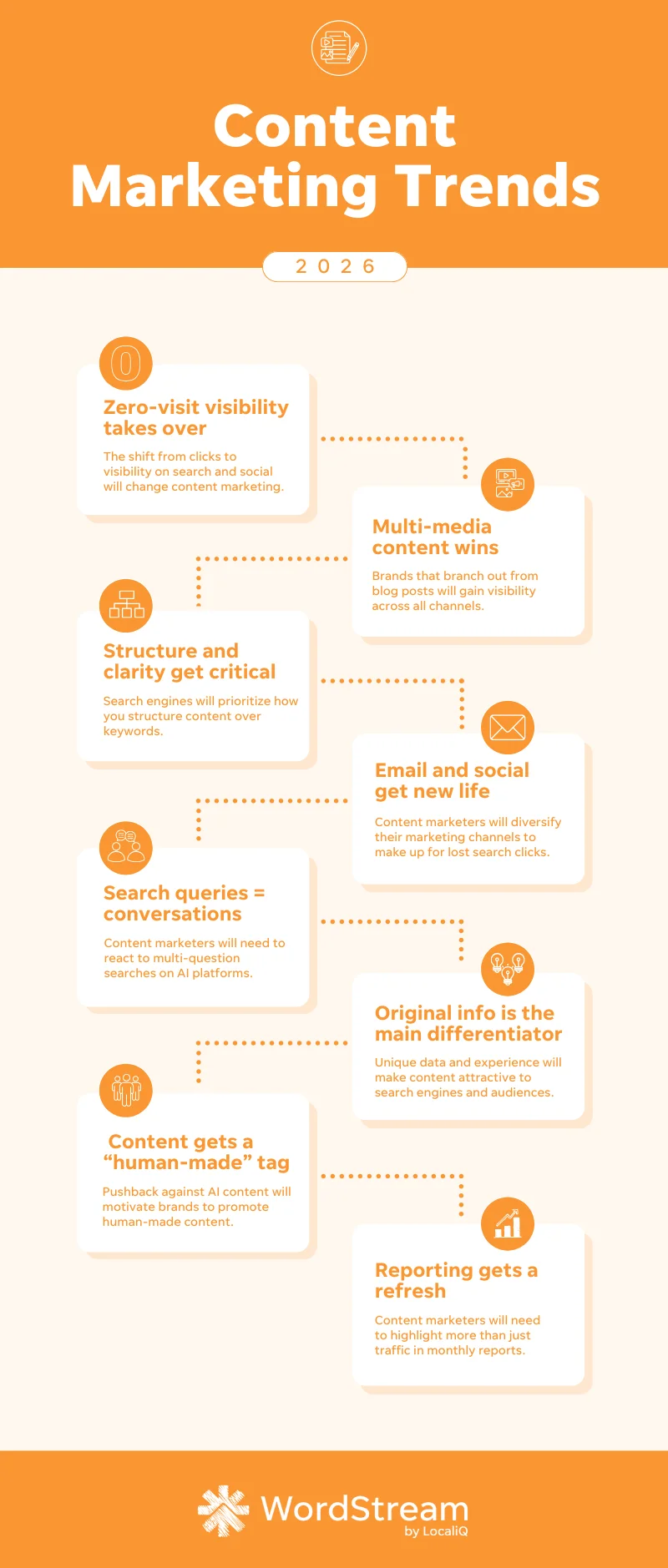
Another important component in 2026 is "information gain." This is a metric used by engines to identify if a piece of material adds anything new to the existing index. If a website simply rephrases what is currently on the first page of search results, it has a low information gain score. The engine has no factor to rank it due to the fact that it does not offer extra worth. To rank well now, content must consist of initial data, special point of views, or professional interviews that can not be discovered in other places. This need for originality has actually required lots of brand names to purchase real research study and data analysis instead of simply surface-level writing.
Organizations are increasingly looking for Asia Virtual Solutions for Professionals to solve presence issues. As the digital area ends up being more congested, the ability to stand out through distinct insights is what separates the leaders from the followers. This often implies moving away from generic guidance and approaching highly specific, technical, or anecdotal content that speaks straight to a specific niche audience. The narrower the focus, the much easier it is to establish topical authority in that specific area.
Mapping the Knowledge Chart for Organic Visibility
For those aiming to enhance for the understanding graph, schema markup has become a requirement instead of an option. In 2026, structured information is the language that bridges the gap in between human-readable text and machine-understandable information. By utilizing sophisticated schema types, organizations can tell online search engine exactly what their material has to do with. They can specify the authors, the items, the places, and the relationships in between them. This decreases the quantity of "thinking" the engine has to do, which causes more accurate indexing and much better exposure in abundant results, such as carousels, maps, and AI-generated summaries.
Author entities are also more essential than ever. Online search engine now track the credibility of specific authors throughout the web. If an author has a history of publishing top quality, accurate material on a particular subject, their byline includes immediate credibility to any new page they compose. This has made "authoritative factors" an essential part of any content marketing plan. Brand names are no longer just constructing their own track record; they are obtaining the reputation of the specialists they hire or work together with. This emphasis on human expertise is a direct reaction to the flood of low-quality AI material that struck the web in the mid-2020s.
Info Gain and the Look For Creativity
The idea of info gain is maybe the most considerable modification in how algorithms examine quality. When a crawler encounters a brand-new page, it compares the semantic vectors of that page to all others it has actually formerly indexed. If the vectors are nearly similar, the brand-new page is deemed redundant. Nevertheless, if the page consists of new realities, different conclusions, or a better method of envisioning data, it is flagged as a high-value resource. This motivates a shift away from "copycat" content techniques that have actually controlled the market for many years.
Utilizing specialized content production can help brands recognize these gaps in the existing market. By examining what rivals are saying and, more importantly, what they are not saying, a brand can position itself as the missing out on piece of the puzzle. This requires a deep understanding of the topic and a desire to take a stand on controversial or complex concerns. The engines in 2026 benefit bravery and depth over security and brevity.
Enhancing for Multi-Modal Browse and Intent Vectors
Browse is no longer almost text. In 2026, users are searching with images, voice, and even enhanced reality interfaces. Semantic search needs to represent these different modes of interaction. A user might take a picture of a broken part and ask, "How do I fix this?" The engine must comprehend the things in the image, identify the likely problem, and find a tutorial that matches the intent. This requires a multi-modal technique to content development where images, videos, and text are all enhanced to interact.
Intent vectors are the mathematical representations of what a user is trying to attain. There are four main types of intent: informational, navigational, commercial, and transactional. Nevertheless, in 2026, these have actually been broken down into lots of micro-intents. An informative inquiry might be "how to," "why does," or "history of." Each of these needs a various type of content structure. A "how to" question requires a step-by-step list, while a "history of" question requires a sequential story. By matching the structure of the material to the specific intent vector, a site can substantially enhance its chances of ranking.
Technical Preparedness for Semantic Crawlers
The technical side of SEO has developed to support these semantic modifications. Speed and mobile-friendliness are still crucial, however the focus has shifted toward "crawl performance." This suggests making it as simple as possible for a bot to understand the relationship in between different pages on a website. A tidy site architecture with rational internal connecting is important. Broken links or "orphan pages" that aren't linked to anything else are major warnings for semantic spiders, as they suggest an absence of organization and authority.
Additionally, making use of vector databases and API-driven content shipment has actually ended up being common for bigger websites. These technologies permit faster processing of intricate queries and a more individualized user experience. When a site can serve content that is dynamically customized to the user's particular context and past habits, it sends strong positive signals to online search engine. The technical facilities should be able to support this level of elegance without compromising performance.
Transitioning to Topical Authority
Moving beyond keywords is a shift from being a "jack of all trades" to being a master of a particular domain. In 2026, the internet is too large for any one site to be a specialist on whatever. The most successful brand names are those that choose a niche and cover it with such depth that the search engine has no option however to recognize them as the main source of truth. This topical authority is the supreme goal of semantic search optimization. It develops a moat around the brand that is hard for competitors to cross, no matter just how much they invest in advertising.
The process of building this authority takes some time and consistency. It involves a consistent cycle of looking into, producing, and upgrading content to ensure it stays the most accurate and helpful resource readily available. In 2026, "freshness" is not simply about the publication date; it is about the significance of the details to the current state of the world. A page that was written two years ago however is still the most comprehensive and precise source on a subject will continue to rank well, offered it is sometimes upgraded to reflect brand-new information or developments.
As the digital environment continues to change, the concepts of semantic search remain a dependable guide for development. By concentrating on meaning, intent, and authority, businesses can construct a presence that is durable to algorithm updates and shifts in user behavior. The period of trying to fool the engine is over. The period of proving value has shown up.