The Covert ROI of Educational Inbound Content
The Shift from Strings to Meanings in 2026
Browse engines in 2026 have actually moved far beyond the age of easy word matching. The innovation now concentrates on vector-based understanding, where queries are dealt with as multidimensional points in a mathematical area rather than strings of characters. This modification suggests that attempting to rank for a specific word is less effective than establishing authority over an idea. When a user searches for details, the algorithm determines the range in between the intent of the inquiry and the semantic depth of the content. If a page offers the most direct course to satisfying that intent, it wins the top spot, even if it never points out the precise search term utilized.
The rise of neural matching and advanced natural language processing has altered the method services approach presence. In previous years, marketers obsessed over density and positioning. Today, the focus has actually shifted toward entity-based optimization. An entity is an individual, location, thing, or concept that is uniquely identifiable. Online search engine now preserve large knowledge charts that link these entities together. If a brand name wishes to be viewed as a leader in its field, it must prove its connection to other high-value entities within that very same sphere. This involves more than simply writing article. It needs an existence throughout numerous platforms that verifies the brand's knowledge and relevance.
Successful methods frequently incorporate Asia Virtual Solutions Blogs as a core element. By concentrating on the underlying meaning of a topic, material developers can catch traffic from countless associated variations of a search question. This technique permits a more natural writing style that prioritizes the reader over the algorithm. In 2026, the algorithm is wise enough to understand that a well-written, comprehensive description of a complex topic is better than a recurring list of keywords. This has actually resulted in a revival of long-form, expert-driven product that provides genuine worth.
Why Keywords Lost Their Dominance to Entities
In the current environment, keywords are merely signals that assist an engine classify a page. They are no longer the primary factor for ranking. Instead, the engine takes a look at "entity salience," which describes how main a particular topic is to the overall file. If a page discusses a lots various subjects quickly, it lacks salience for any of them. If it dives deep into a particular subject, providing context and information that others lack, its salience boosts. This is why specialized understanding has become the most crucial currency in organic development.
The knowledge graph uses relationships to determine trust. If a website regularly discusses specialized marketing topics and links those conversations to verified authors and credible organizations, the search engine assigns a higher trust rating. This score is not easily manipulated by old-school techniques like buying backlinks or over-optimizing meta tags. It requires a sustained effort to build a digital footprint that shows real-world authority. The engines are now capable of cross-referencing info from social networks, news outlets, and academic databases to verify the claims made on a site.
Asia Virtual Solutions Technical Success Tips serves as a structure for modern-day natural growth. When a business aligns its digital output with the particular needs and concerns of its audience, it creates a feedback loop of positive signals. High engagement rates, long dwell times, and low bounce rates inform the engine that the content is fulfilling its guarantee. In 2026, these user signals are weighted heavily due to the fact that they represent a direct human confirmation of the engine's mathematical predictions.
Material Method for Digital Growth in the Semantic Age

Constructing a strategy around semantic search needs a different state of mind than the one utilized a couple of years ago. The goal is to produce "content clusters" rather than private pages. A cluster includes a central pillar page that provides a broad introduction of a major topic, surrounded by numerous cluster pages that go into information on particular sub-topics. These pages are all linked together in a manner that reveals the search engine the breadth and depth of the website's understanding. This structure assists search bots navigate the site more efficiently and understand the hierarchy of information.
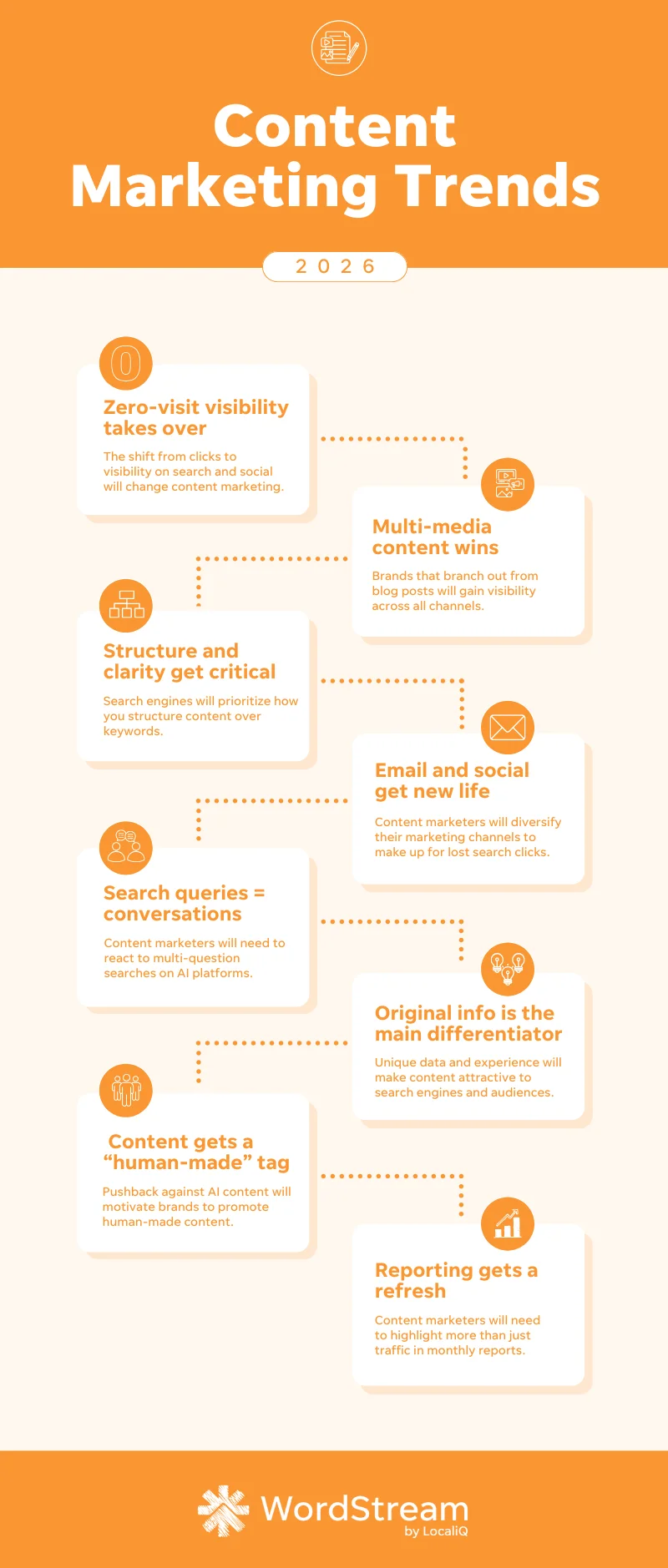
Another critical aspect in 2026 is "information gain." This is a metric used by engines to figure out if a piece of content includes anything new to the existing index. If a website just rephrases what is already on the very first page of search engine result, it has a low info gain score. The engine has no factor to rank it since it does not supply additional worth. To rank well now, content should consist of original data, distinct point of views, or expert interviews that can not be found somewhere else. This need for originality has required numerous brands to purchase real research and data analysis instead of just surface-level writing.
Organizations are significantly looking for Asia Virtual Solutions for Voice UI to fix visibility concerns. As the digital space becomes more crowded, the capability to stick out through special insights is what separates the leaders from the followers. This typically indicates moving far from generic recommendations and moving towards extremely specific, technical, or anecdotal content that speaks straight to a specific niche audience. The narrower the focus, the much easier it is to develop topical authority in that particular location.
Mapping the Knowledge Graph for Organic Exposure
For those aiming to enhance for the knowledge chart, schema markup has become a requirement instead of an option. In 2026, structured information is the language that bridges the gap in between human-readable text and machine-understandable data. By utilizing sophisticated schema types, companies can tell online search engine precisely what their content is about. They can specify the authors, the items, the areas, and the relationships between them. This lowers the quantity of "thinking" the engine has to do, which causes more accurate indexing and better visibility in rich results, such as carousels, maps, and AI-generated summaries.
Author entities are also more vital than ever. Online search engine now track the track record of individual writers across the web. If an author has a history of releasing high-quality, factual content on a particular subject, their byline includes instantaneous credibility to any new page they write. This has made "reliable factors" a crucial part of any content marketing strategy. Brands are no longer just building their own credibility; they are borrowing the credibility of the professionals they employ or collaborate with. This focus on human expertise is a direct action to the flood of low-grade AI content that struck the web in the mid-2020s.
Information Gain and the Look For Originality
The idea of info gain is possibly the most considerable change in how algorithms assess quality. When a spider comes across a new page, it compares the semantic vectors of that page to all others it has previously indexed. If the vectors are almost identical, the brand-new page is deemed redundant. If the page includes brand-new truths, various conclusions, or a more useful way of envisioning data, it is flagged as a high-value resource. This motivates a shift far from "copycat" content strategies that have controlled the market for many years.
Using specialized content production can assist brands determine these spaces in the present market. By examining what competitors are saying and, more notably, what they are not stating, a brand can position itself as the missing piece of the puzzle. This needs a deep understanding of the subject matter and a desire to decide on questionable or complex problems. The engines in 2026 benefit bravery and depth over security and brevity.
Optimizing for Multi-Modal Search and Intent Vectors
Browse is no longer just about text. In 2026, users are searching with images, voice, and even augmented reality user interfaces. Semantic search must represent these different modes of interaction. A user might take a photo of a broken part and ask, "How do I fix this?" The engine should comprehend the things in the image, recognize the likely issue, and find a tutorial that matches the intent. This requires a multi-modal technique to content creation where images, videos, and text are all optimized to collaborate.
Intent vectors are the mathematical representations of what a user is attempting to attain. There are four primary types of intent: informative, navigational, industrial, and transactional. However, in 2026, these have been broken down into lots of micro-intents. For instance, an informational question may be "how to," "why does," or "history of." Each of these needs a different type of content structure. A "how to" inquiry requires a detailed list, while a "history of" question requires a chronological narrative. By matching the structure of the content to the particular intent vector, a website can significantly improve its opportunities of ranking.
Technical Readiness for Semantic Crawlers
The technical side of SEO has actually evolved to support these semantic modifications. Speed and mobile-friendliness are still important, but the focus has moved toward "crawl effectiveness." This indicates making it as easy as possible for a bot to comprehend the relationship in between different pages on a site. A tidy website architecture with sensible internal linking is essential. Broken links or "orphan pages" that aren't connected to anything else are major red flags for semantic crawlers, as they suggest a lack of organization and authority.
Furthermore, the usage of vector databases and API-driven material shipment has ended up being common for bigger websites. These technologies enable for faster processing of intricate queries and a more customized user experience. When a site can serve content that is dynamically customized to the user's particular context and past habits, it sends strong favorable signals to online search engine. The technical infrastructure must be able to support this level of sophistication without sacrificing performance.
Transitioning to Topical Authority
Moving beyond keywords is a shift from being a "jack of all trades" to being a master of a specific domain. In 2026, the internet is too big for any one site to be a specialist on everything. The most successful brands are those that choose a niche and cover it with such depth that the search engine has no option but to acknowledge them as the primary source of fact. This topical authority is the supreme objective of semantic search optimization. It develops a moat around the brand that is hard for rivals to cross, no matter just how much they invest in advertising.
The procedure of building this authority takes time and consistency. It includes a constant cycle of looking into, creating, and upgrading material to ensure it stays the most accurate and useful resource available. In 2026, "freshness" is not almost the publication date; it has to do with the significance of the details to the current state of the world. A page that was composed two years ago but is still the most in-depth and accurate source on a topic will continue to rank well, provided it is periodically updated to show new information or advancements.
As the digital environment continues to alter, the principles of semantic search remain a trusted guide for growth. By concentrating on meaning, intent, and authority, businesses can construct an existence that is resilient to algorithm updates and shifts in user behavior. The era of trying to deceive the engine is over. The age of proving worth has gotten here.