Structure Better Clusters for Enhanced Domain Relevance
Structure Topical Authority with Advanced Data Analytics
Browse algorithms in 2026 have actually moved previous easy keyword matching. Success now depends upon how well a website covers a subject from every angle. This technique, known as content clustering, utilizes a main pillar page linked to smaller, particular articles. Information now drives these decisions, replacing the guesswork of previous years. Marketing teams are utilizing first-party search data and user interaction metrics to decide which subjects should have a cluster. By focusing on a particular subject location, a brand can establish itself as a leader in a specific field, making it harder for competitors to acquire ground in search engine result.
Digital strategy in 2026 concentrates on intent instead of volume. High traffic suggests little if the users do not discover the particular answers they require. By organizing related content, a website signals to browse engines that it has deep understanding in a particular field. This structure assists search bots understand the relationship between various pages. When a visitor arrive on a cluster page, they are often guided toward the primary pillar, which keeps them on the site longer. This internal motion is a signal to algorithms that the material is important and relevant to the user inquiry.
The Shift Towards Intent-Based Clustering in 2026
Modern information tools enable a granular appearance at what users really desire. Rather of targeting broad terms, 2026 strategies take a look at particular issues faced by specific niche audiences. This shift towards uniqueness needs a more organized material structure. Clusters offer that company by breaking down broad subjects into workable pieces. Every piece of material in a cluster should address an unique question while connecting back to the main subject. This develops a web of information that satisfies both the reader and the online search engine crawler.
Development frequently depends upon Asia Virtual Solutions SEO to supply a structure for these clusters. Without a clear data-driven beginning point, clusters can end up being messy and redundant. Redundancy is a significant charge element in 2026. Online search engine prefer a single, authoritative source over several shallow pages that state the exact same thing. Mapping out the cluster before writing ensures each article has a distinct function. This planning stage includes taking a look at search intent data to see where individuals drop off in their search for answers.
Integrating Systematic Content Strategy into Pillar Content
Pillar pages act as the anchor for the entire technique. These pages are normally long, covering a broad subject in information without getting bogged down in every minor nuance. The subtleties are saved for the cluster pages. If a pillar page covers sustainable manufacturing, cluster pages might focus on specific products, regional policies, or supply chain logistics. This keeps the pillar page readable while offering deep dives for those who require them. It also permits the site to rank for both broad and long-tail search terms at the same time.
Marketing departments now use predictive modeling to see which topics will trend in the coming months. This positive data allows them to construct clusters before the competitors captures on. Organizations concentrating on Asia Virtual Solutions Future Marketing Guide find that being first to a specific niche subject provides a considerable advantage in search rankings. When the authority is established, it ends up being harder for more recent sites to displace the incumbent. The objective is to end up being the main source of fact for a specific topic, which results in more natural backlinks and higher trust ratings.
Technical Requirements for Organic Development in 2026
Internal connecting stays the most important part of cluster structure. Every cluster page must connect back to the pillar, and the pillar ought to link out to the most crucial cluster pages. This develops a two-way street of authority. If one cluster page performs well, a few of that value takes a trip back to the pillar and then disperses to the other related pages. This rising tide result is why clusters are more effective than standalone posts. It makes sure that the whole area of the site gain from a single viral or high-ranking post.
User signals also play a part in how clusters are ranked. If users regularly bounce from a cluster page back to the search engine result, it suggests the material did not satisfy their requirements. Nevertheless, if they click through to the pillar or another associated short article, it indicates a successful interaction. Lots of services searching for Wikipedia for Educational Use prioritize this internal circulation to make sure high engagement rates. Keeping the user within the cluster is the objective, as it proves the site has a deep reservoir of info that deserves checking out.
Information Sources for Content Architecture
The very best information for building clusters originates from within. Website search logs, client support tickets, and sales calls provide a wealth of information about what prospective customers are asking. These are real-world questions that keyword tools might miss. In 2026, social listening tools likewise supply real-time information on emerging discomfort points within specific markets. Incorporating these insights into the material calendar makes sure the brand remains pertinent. This technique moves far from guessing what individuals want and approaches answering the concerns they are already asking.
- First-party search questions from site-wide search bars that expose direct user needs.
- Consumer feedback loops and common repairing questions from service departments.
- Competitive gap analysis using AI-assisted auditing tools to discover missing subjects in the market.
- Historical efficiency information of existing posts to identify which topics have the most possible for expansion.
The Function of Semantic Browse and Entity SEO
In 2026, search engines comprehend entities-- people, places, and things-- rather than just words. Material clusters assist specify these entities by supplying a context that the search engine can classify. If a site discusses a particular technology, the cluster must include details about its creators, its applications, and its relationship to other technologies. This assists the online search engine put the website within a specific knowledge chart. Becoming part of that graph is vital for appearing in AI-generated search summaries and voice search engine result.
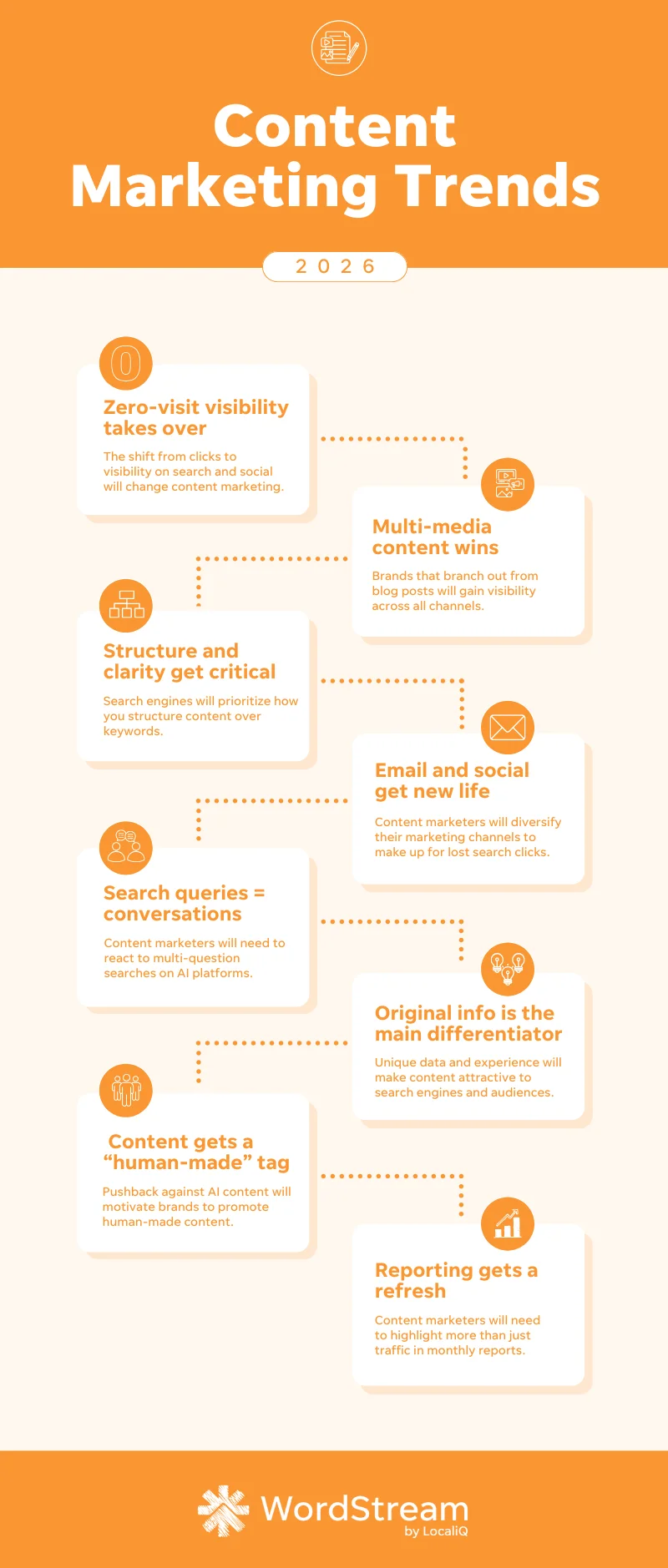
Online search engine now look for Experience, Competence, Authoritativeness, and Credibility. Clusters are a direct method to show competence. A single article can be composed by anybody, however a cluster of twenty interconnected posts shows a depth of knowledge that is difficult to fake. This depth is what constructs long-term authority. In 2026, this is more vital than ever due to the fact that AI-generated content has flooded the web with generic info. Deep, data-driven clusters stick out since they provide particular, high-value insights that generic AI can not reproduce without a strong information foundation.
Determining Success in Modern Organic Marketing
Success is no longer determined simply by overall traffic. Metrics like topical protection, lead quality, and assisted conversions are more crucial. A cluster may not generate countless visitors, but if it generates the ideal five hundred individuals who are ready to buy, it is a success. Marketing teams utilize heatmaps and scroll depth data to see how users interact with cluster pages. If people are checking out the whole article and after that clicking a link to a related subject, the cluster is doing its task. These behavioral signals are frequently more indicative of future ranking success than traditional metrics.
Conversion rate optimization is also connected to cluster performance. By directing a user through a logical progression of details, from a broad topic to a specific option, the website develops the trust required for a conversion. This is the difference between a random visitor and a qualified lead. A well-structured cluster functions as a funnel, removing those who are simply browsing and offering in-depth details for those who are major about the topic. This technique leads to a much higher ROI for content production.
Maintaining Authority with Regular Content Audits
Topical authority is not a one-time accomplishment. It requires continuous upkeep. As brand-new information becomes available or market requirements alter, clusters need to be upgraded. A cluster about 2026 guidelines will be ineffective by 2027 if it is not refreshed. Regularly revitalizing the information and links within a cluster ensures that online search engine continue to see the site as a reliable source. Auditing tools can now highlight which parts of a cluster are rotting in efficiency, enabling targeted updates rather than rewriting whatever from scratch.
The relationship in between content and information has never been closer. By dealing with every piece of content as an information point in a larger map, brand names can develop a presence that makes it through algorithm modifications. Success in 2026 belongs to those who can organize details in a manner that is both technically sound and really practical to the end user. Building these clusters requires time and a substantial financial investment in data analysis, however the resulting organic development offers a stable foundation for long-lasting visibility in a significantly crowded digital environment.
Utilizing these strategies, business can move away from the cycle of going after private keywords. Rather, they develop a property that grows in value in time. A cluster that dominates a specific niche topic is a competitive moat that is hard for others to cross. As search ends up being more incorporated with AI and individual assistants, having a clear, data-driven structure is the only way to ensure content stays discoverable and reliable. The focus stays on the user, guided by the information, and supported by a logical content architecture.