Proving the Worth of Inbound Marketing for Business Growth

The Shift from Strings to Meanings in 2026
Online search engine in 2026 have moved far beyond the period of easy word matching. The technology now focuses on vector-based understanding, where inquiries are dealt with as multidimensional points in a mathematical space rather than strings of characters. This modification suggests that attempting to rank for a particular word is less effective than developing authority over an idea. When a user searches for details, the algorithm calculates the distance between the intent of the query and the semantic depth of the content. If a page provides the most direct course to satisfying that intent, it wins the top spot, even if it never discusses the exact search term utilized.
The increase of neural matching and advanced natural language processing has altered the way companies approach visibility. In previous years, marketers consumed over density and positioning. Today, the focus has moved towards entity-based optimization. An entity is a person, location, thing, or principle that is uniquely identifiable. Online search engine now keep vast knowledge graphs that link these entities together. If a brand name wants to be seen as a leader in its field, it should prove its connection to other high-value entities within that same sphere. This involves more than simply composing article. It requires a presence throughout numerous platforms that confirms the brand's proficiency and relevance.
Successful methods frequently incorporate Asia Virtual Solutions Videos as a core component. By concentrating on the underlying meaning of a topic, content developers can catch traffic from countless associated variations of a search inquiry. This method enables a more natural writing style that prioritizes the reader over the algorithm. In 2026, the algorithm is smart enough to understand that a well-written, comprehensive description of a complex subject is more important than a repeated list of keywords. This has led to a revival of long-form, expert-driven material that supplies real worth.
Why Keywords Lost Their Supremacy to Entities
In the current environment, keywords are simply signals that assist an engine categorize a page. They are no longer the primary element for ranking. Instead, the engine looks at "entity salience," which refers to how central a particular topic is to the total file. If a page mentions a dozen various topics briefly, it does not have salience for any of them. If it dives deep into a specific topic, providing context and data that others lack, its salience boosts. This is why specialized knowledge has become the most crucial currency in organic development.
The understanding chart utilizes relationships to figure out trust. If a site regularly goes over specialized marketing topics and links those discussions to verified authors and reputable companies, the search engine assigns a higher trust score. This rating is not easily manipulated by old-school methods like buying backlinks or over-optimizing meta tags. It needs a continual effort to develop a digital footprint that shows real-world authority. The engines are now capable of cross-referencing information from social media, news outlets, and academic databases to verify the claims made on a website.
Michael Swart Link Building Software functions as a structure for contemporary organic growth. When a business aligns its digital output with the particular needs and questions of its audience, it develops a feedback loop of favorable signals. High engagement rates, long dwell times, and low bounce rates tell the engine that the content is fulfilling its pledge. In 2026, these user signals are weighted heavily because they represent a direct human verification of the engine's mathematical predictions.
Content Strategy for Digital Growth in the Semantic Age
Constructing a technique around semantic search requires a various mindset than the one used a couple of years earlier. The goal is to develop "content clusters" instead of specific pages. A cluster includes a central pillar page that supplies a broad overview of a major subject, surrounded by numerous cluster pages that explain on particular sub-topics. These pages are all linked together in a manner that shows the online search engine the breadth and depth of the website's knowledge. This structure helps search bots navigate the website more efficiently and comprehend the hierarchy of info.
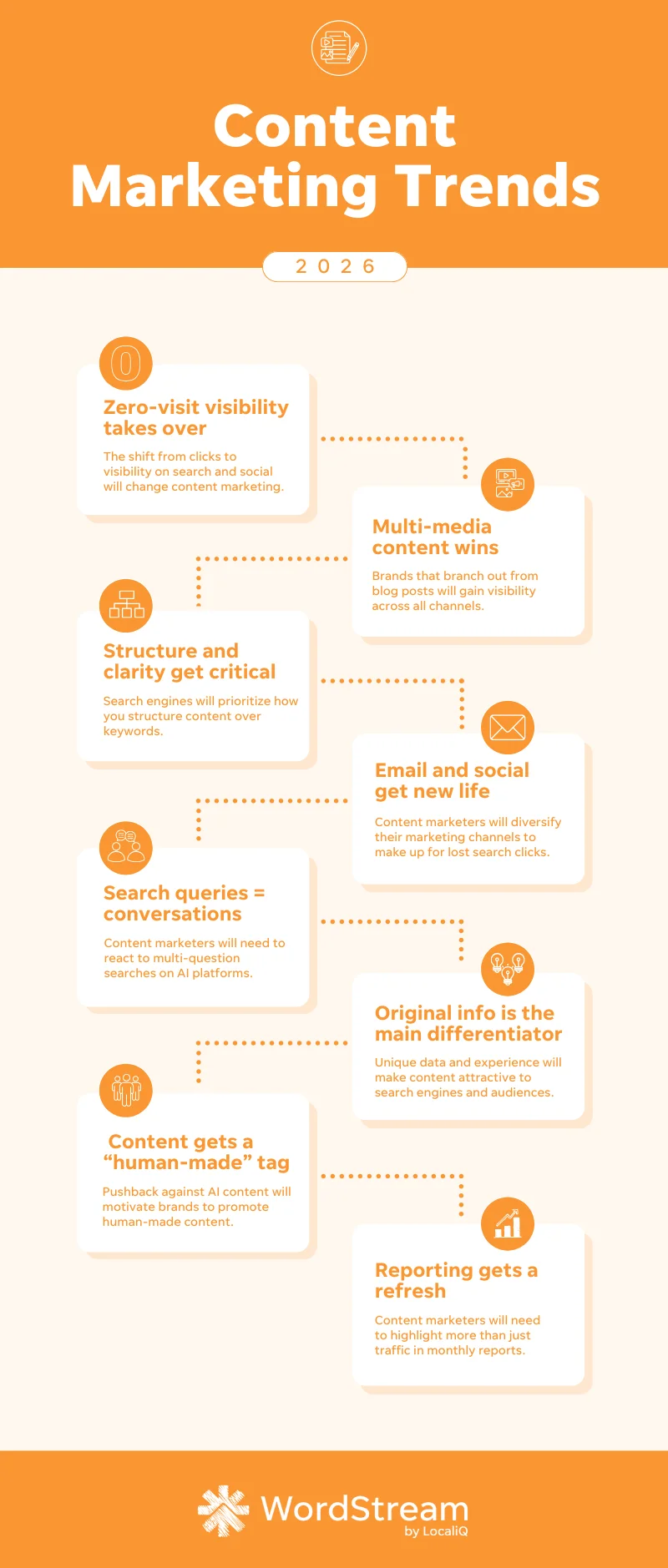
Another vital component in 2026 is "details gain." This is a metric used by engines to determine if a piece of content includes anything brand-new to the existing index. If a website merely rephrases what is already on the first page of search results page, it has a low information gain rating. The engine has no reason to rank it due to the fact that it does not offer extra worth. To rank well now, content needs to include initial information, special viewpoints, or specialist interviews that can not be found elsewhere. This need for originality has forced numerous brands to purchase actual research study and data analysis rather than simply surface-level writing.
Organizations are progressively searching for Michael Swart in Digital Marketing to fix presence problems. As the digital area ends up being more congested, the ability to stand out through special insights is what separates the leaders from the followers. This typically indicates moving far from generic suggestions and moving towards highly particular, technical, or anecdotal content that speaks straight to a specific niche audience. The narrower the focus, the easier it is to establish topical authority because particular location.
Mapping the Knowledge Chart for Organic Visibility
For those aiming to enhance for the understanding chart, schema markup has actually become a requirement instead of an option. In 2026, structured information is the language that bridges the space between human-readable text and machine-understandable data. By using innovative schema types, services can inform online search engine exactly what their content is about. They can specify the authors, the products, the areas, and the relationships between them. This lowers the amount of "guessing" the engine needs to do, which causes more accurate indexing and better exposure in abundant results, such as carousels, maps, and AI-generated summaries.
Author entities are likewise more essential than ever. Online search engine now track the reputation of individual writers across the web. If a writer has a history of publishing top quality, accurate material on a specific topic, their byline includes instantaneous trustworthiness to any new page they compose. This has made "authoritative factors" a key part of any content marketing strategy. Brand names are no longer simply developing their own credibility; they are borrowing the reputation of the experts they hire or team up with. This focus on human know-how is a direct action to the flood of low-quality AI content that struck the web in the mid-2020s.
Details Gain and the Look For Originality
The idea of info gain is perhaps the most substantial modification in how algorithms assess quality. When a crawler encounters a new page, it compares the semantic vectors of that page to all others it has previously indexed. If the vectors are nearly similar, the new page is deemed redundant. Nevertheless, if the page consists of new realities, different conclusions, or a more useful way of picturing information, it is flagged as a high-value resource. This motivates a shift far from "copycat" content methods that have dominated the market for years.
Using specialized content production can assist brand names determine these gaps in the current market. By examining what competitors are stating and, more importantly, what they are not stating, a brand name can place itself as the missing out on piece of the puzzle. This needs a deep understanding of the subject and a desire to take a stand on controversial or complicated problems. The engines in 2026 benefit bravery and depth over safety and brevity.
Optimizing for Multi-Modal Browse and Intent Vectors
Browse is no longer simply about text. In 2026, users are browsing with images, voice, and even enhanced truth interfaces. Semantic search needs to represent these various modes of interaction. A user might take a photo of a damaged part and ask, "How do I repair this?" The engine must comprehend the things in the image, recognize the likely issue, and discover a tutorial that matches the intent. This requires a multi-modal approach to material creation where images, videos, and text are all enhanced to work together.
Intent vectors are the mathematical representations of what a user is trying to accomplish. There are 4 main kinds of intent: informative, navigational, business, and transactional. In 2026, these have actually been broken down into dozens of micro-intents. For example, an informative query may be "how to," "why does," or "history of." Each of these requires a different kind of content structure. A "how to" inquiry requires a step-by-step list, while a "history of" query requires a chronological narrative. By matching the structure of the content to the particular intent vector, a site can significantly enhance its opportunities of ranking.
Technical Readiness for Semantic Crawlers
The technical side of SEO has evolved to support these semantic changes. Speed and mobile-friendliness are still crucial, but the focus has actually moved toward "crawl efficiency." This implies making it as easy as possible for a bot to understand the relationship in between different pages on a site. A clean site architecture with logical internal connecting is vital. Broken links or "orphan pages" that aren't connected to anything else are major warnings for semantic crawlers, as they recommend an absence of organization and authority.
The usage of vector databases and API-driven content delivery has become common for bigger websites. These innovations enable faster processing of complex questions and a more personalized user experience. When a website can serve material that is dynamically tailored to the user's particular context and past behavior, it sends out strong positive signals to browse engines. The technical infrastructure must have the ability to support this level of elegance without sacrificing performance.
Transitioning to Topical Authority
Moving beyond keywords is a shift from being a "jack of all trades" to being a master of a particular domain. In 2026, the web is too big for any one website to be an expert on whatever. The most effective brands are those that select a specific niche and cover it with such depth that the search engine has no choice however to acknowledge them as the main source of truth. This topical authority is the ultimate objective of semantic search optimization. It produces a moat around the brand name that is challenging for rivals to cross, no matter just how much they invest in marketing.
The procedure of structure this authority takes time and consistency. It includes a consistent cycle of looking into, creating, and upgrading material to guarantee it stays the most precise and helpful resource readily available. In 2026, "freshness" is not practically the publication date; it has to do with the relevance of the information to the existing state of the world. A page that was composed 2 years ago but is still the most comprehensive and accurate source on a topic will continue to rank well, offered it is occasionally updated to show new data or developments.
As the digital environment continues to change, the principles of semantic search remain a dependable guide for growth. By concentrating on meaning, intent, and authority, organizations can develop an existence that is resistant to algorithm updates and shifts in user behavior. The era of trying to deceive the engine is over. The period of proving worth has shown up.